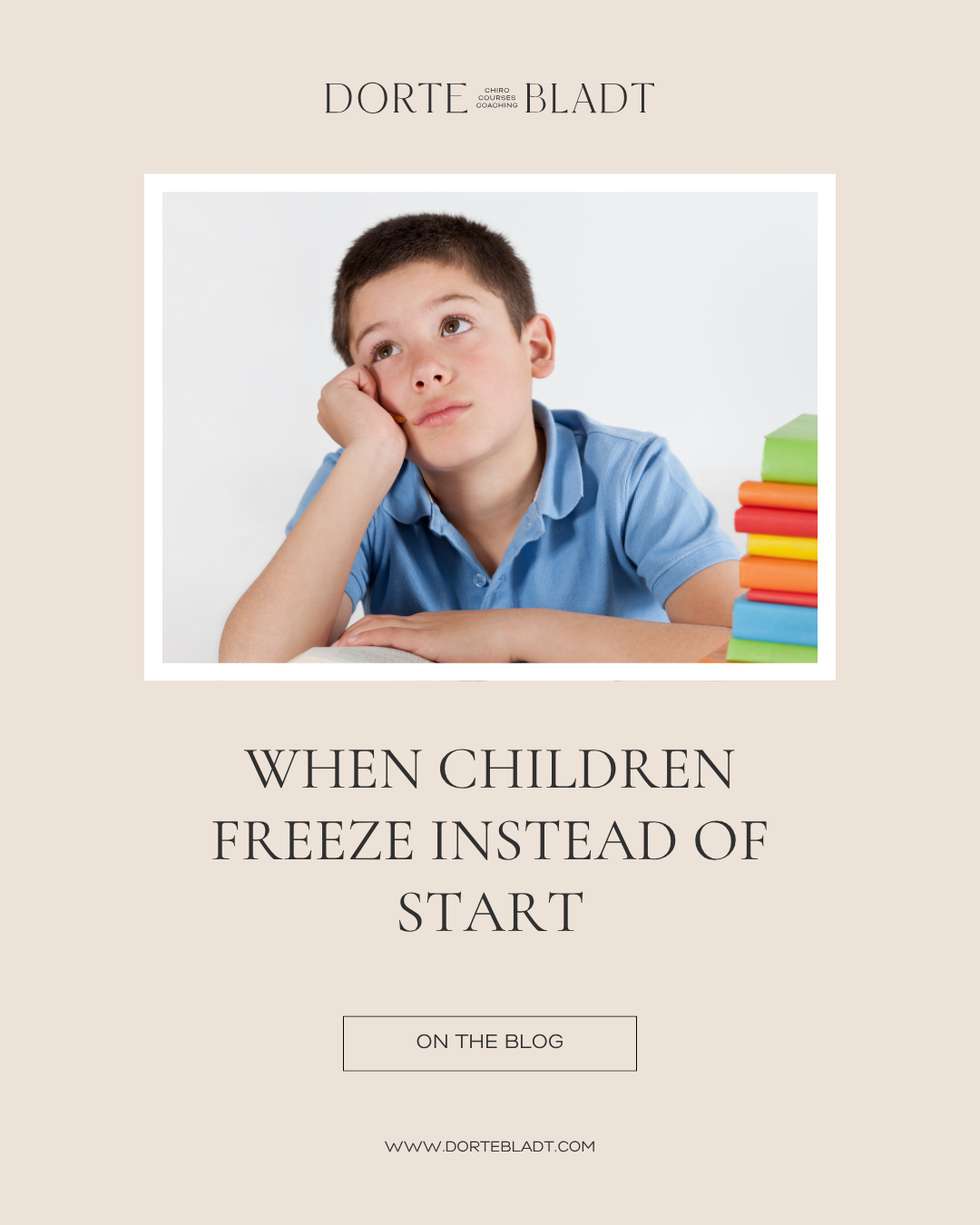
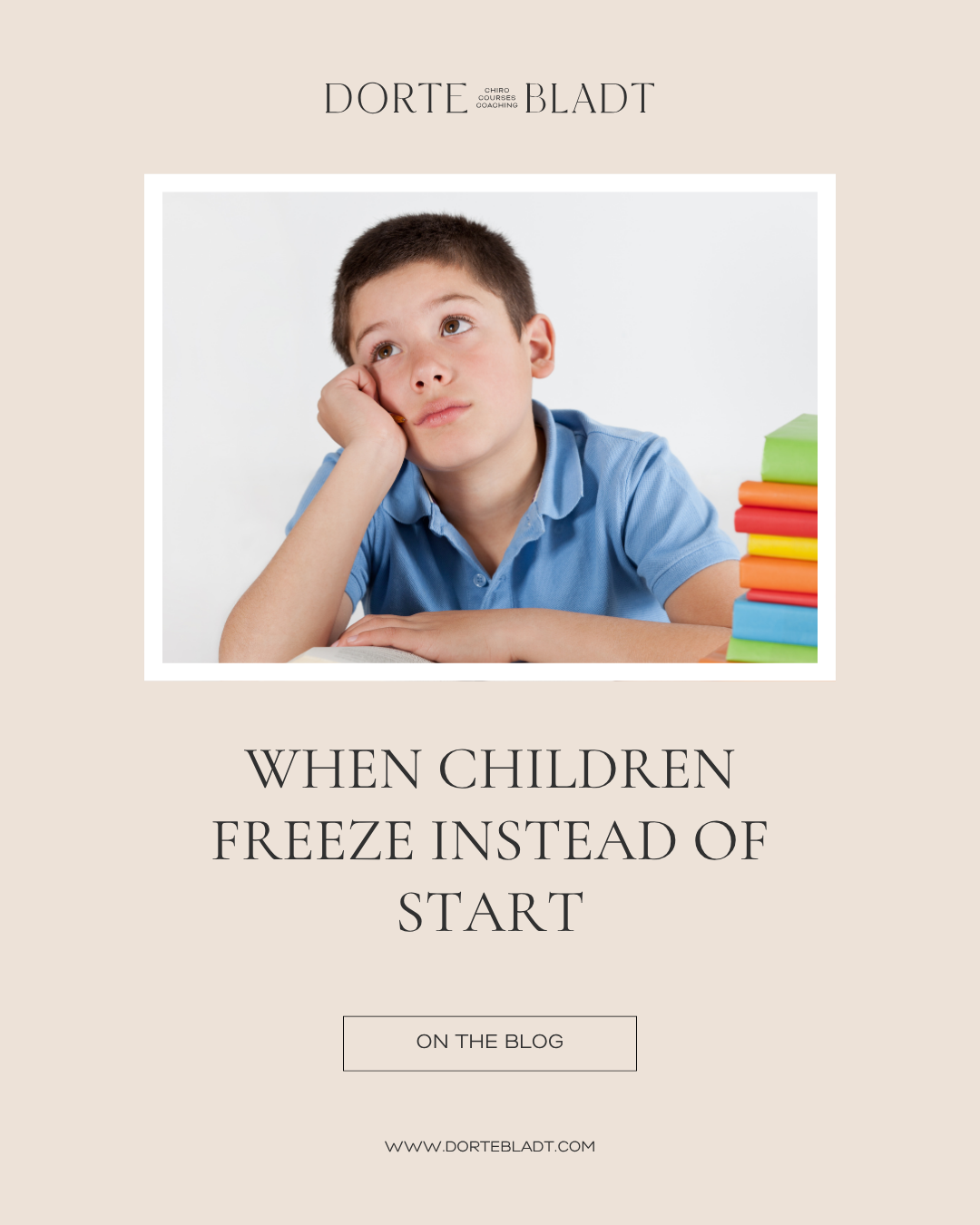
When Children Freeze Instead of Start
I have been incredibly productive while writing this blog. I have cleaned the fridge, trimmed the plants, sorted through old clothes and even tackled a dusty box of VHS tapes that has been sitting in the garage since approximately 1997.
The actual blog? Well… that took a little longer.
Sound familiar?
I expect so, because procrastination is astonishingly common. Research suggests that 15–25% of adults are chronic procrastinators, while an incredible 80–95% of students procrastinate at some point in their academic lives.
As chiropractors working with children, how often do we hear frustrated parents say:
“If only they would get around to doing their homework.”
“If only they would stop faffing around and just get it done.”
Hidden underneath these statements is often the assumption of laziness, distractibility or even disobedience.
However, modern research is painting a very different picture. Increasingly, procrastination is being understood not as a time-management problem, but as an emotional regulation problem. In simple terms, the child is not necessarily avoiding the task itself - they are avoiding the feeling attached to the task.
That feeling may be:
overwhelm
anxiety
boredom
fear of failure
perfectionism
uncertainty
feeling “not good enough”
Over time, repeated procrastination and criticism can quietly erode a child’s confidence and self-worth. And when the nervous system perceives those emotions as stressful, avoidance becomes a protective strategy.
Interestingly, this ties beautifully into what many of us observe clinically every day. A dysregulated nervous system may present in practice as:
emotional meltdowns
hypersensitivity to sound, light or clothing textures
poor sleep
difficulty transitioning
social struggles
anxiety
hyperactivity
shutting down or withdrawing
overwhelm with seemingly simple tasks
Traditionally, stress responses have been described as fight or flight. But neuroscience now recognises another very important response:
freeze.
When the nervous system feels overloaded or unable to cope with a challenge, it may shift into a state of shutdown, avoidance or paralysis. The child is not simply choosing to avoid the task. Their nervous system may literally be struggling to organise itself enough to start.
Suddenly, procrastination looks much less like laziness and much more like nervous system overload.
Children today are growing up in an environment of constant stimulation, pressure and sensory overload, where many little nervous systems rarely get a chance to truly regulate and recover.
From a practical point of view, supporting nervous system adaptability and regulation may help children better tolerate stress, transition between tasks and engage more effectively with the world around them. This is where our chiropractic care, lifestyle conversations and family guidance become so important.
Alongside adjusting, we can encourage families to:
prioritise sleep
increase outdoor play and movement
reduce overstimulation where possible
support wholesome nutrition
create predictable routines
allow downtime and recovery
encourage emotional conversations rather than criticism
Importantly, parents can also help children reframe difficult tasks.
Instead of:
“You need to stop being lazy.”
The conversation might become:
“Does this task feel overwhelming?”
“Which part feels hardest?”
“How can we make this easier to start?”
Helping children break large tasks into small, achievable “bite-sized” steps can dramatically reduce nervous system overwhelm.
Sometimes the goal is simply:
Open the laptop.
Write one sentence.
Do two minutes.
Because momentum often creates motivation - not the other way around.
Helping children understand their own patterns can also be incredibly empowering. Some children naturally tend to see mountains instead of molehills. Once they recognise this tendency, they can begin developing strategies to reduce overwhelm before it spirals.
And perhaps we adults need the reminder too.
My own strategy for distracted procrastination?
Sit down with the laptop and start writing. It honestly does not matter how terrible, random or off-topic the first few paragraphs are. Within a few minutes, my brain usually settles, the nervous system calms, and I begin zoning in on the actual task.
Then I leave it for a day or so and come back with fresh eyes, ruthlessly deleting most of the previous gibberish. Eventually something useful emerges. And finally, I feel lighter, satisfied and quietly proud that yet another blog somehow made it out into the world, somewhere reasonably close to the due date 😊.
References:
Sirois FM, Pychyl TA. Procrastination and the Priority of Short-Term Mood Regulation: Consequences for Future Self. Social and Personality Psychology Compass. 2013.
Frontiers in Psychiatry (2025). Emotional regulation and procrastination research review.
Sirois FM TEMPO Toolkit (Taming Emotions to Manage Procrastination Open-heartedly)